Phishing clones are fake copies of legitimate dark web sites or marketplaces, created to harvest login details and personal information from unsuspecting users. By using the Tor network, users can browse the internet without revealing their IP address or location. This can be particularly useful for people living in countries with strict censorship laws, as onion sites can provide access to content that may be blocked or restricted.
The dark web offers access to unique information and resources you won’t find on the surface web, but staying safe should always come first when choosing a search engine. Different dark web search engines cater to various needs, offering varying levels of privacy, security, and ease of use. Venus crawls and gathers a wide array of onion sites, ensuring you have access to the latest information available on the dark web. The search engine doesn’t impose censorship, meaning you can find a broad spectrum of sites, including those that may be illegal or disturbing. Torch is one of the oldest dark web search engines, having served the darknet community for years. It boasts a vast archive of over 400,000 pages, providing comprehensive coverage of .onion sites, including forums, blogs, and marketplaces.
Encrypted Communication Tools
Many people see hacked information and stolen card data being sold on the dark web. For example, you can find information unavailable to the public and share data privately while protecting your online identity. Note that most dark web transactions are carried out using Bitcoin or other cryptocurrencies. It is the dark web’s version of Wikipedia with a massive links directory. You will find all the necessary .onion links to access any content or service on the dark web.
- Haystak also offers a premium version that allows advanced search, access to historical content, and email alerts.
- Torch is the oldest and largest .onion search engine with more than 1 million .onion sites indexed.
- For those needing an additional layer of security, you can set it to disappear right after viewing.
- Instead, onion sites are derived from a cryptographic key and must be accessed using the Tor browser.
- Simply put, accessing and browsing the dark web is perfectly legal.
How To Safely Access The Best Dark Web Sites – Quick Guide

You must review the site’s descriptions before you click to open them. When you try to enter a .onion website, it will reroute your access request around the internet, bouncing it off three random servers before you reach the target website. This is an estimated reading time to let you know how long it will take you to read all the content on this particular PrivacyRadar.com page. However, it has a sneak peek, easy guide steps, and/or a quick list providing quick in-page navigations and easily-found answers if desired. For several years, Yahoo was at the apex as the internet’s best web service provider, offering… It is a relatively new provider but offers better features than most established VPNs.

The internet is a vast, complex ecosystem that connects billions of people around the world. However, this interconnectedness also comes with risks, such as the loss of privacy and the exposure of personal information. ProPublica is an investigative news site owned by an independent nonprofit that exposes abuses of power and corruption.

Understanding Onion Sites
Onion sites are hosted on servers that are part of the Tor network. When a user accesses an onion site, their connection is routed through a series of nodes, or relays, which are operated by volunteers around the world. This creates layers of encryption that make it difficult to track the user’s online activity. The final relay, known as the exit node, decrypts the user’s traffic and sends it to the website they are trying to access.

Without the right precautions, your IP address could be exposed, leaving you vulnerable to hacking, tracking, or even identity theft. If the websites you visit use tracking scripts, third parties can monitor you. Also, refrain from putting any personal information on the dark web.
Related Articles From The Safe Browsing Section
You could try to visit a major site like Facebook’s onion site to check if your browser is working at all. This would verify if it’s a browser issue or just an issue with the site. While technically not an onion site, we’re including Sci-Hub (sci-hub.se) as an interesting example of a site you can access via Tor. Sci-Hub gives access to millions of scientific papers, mostly ones from behind paywalls. However, due to copyright infringement, Sci-Hub is considered illegal and banned in many countries.
Accessing the dark web is legal in itself; the nature of the activities you engage in ensures it stays that way. Criminals prefer the dark web because it offers anonymity like never before. But as long as you don’t knowingly engage in illicit activity on the dark web, you are completely fine. Sci-hub is a helpful dark web platform for those looking to access important research blocked by a paywall. You can access almost any published paper that would have otherwise been hidden behind a paywall.
- Its community-driven verification system helps minimize the risk of scams and outdated URLs.
- Download AVG Secure VPN to encrypt your internet connection and protect your privacy wherever you go on the web.
- It blocks browser trackers and resists fingerprinting, which helps maintain your anonymity while browsing.
- It’s crucial to understand that while these sites can offer unique content and services, they also come with their own set of risks.
- That’s where dark web search engines come in — they help you discover hidden websites and make navigating this part of the internet easier.
Regulations Governing Onion Sites
The Hidden Wiki is a gateway to these deep web resources, offering links to .onion sites that cannot be found via Google or other surface web search engines. Another critical advantage of the Hidden Wiki lies in its resistance to censorship. This makes it an essential resource for users living under oppressive regimes or in countries with strict internet controls.
Tor And The Onion Browser
Keep reading for a rundown of the best dark links you might want to check out. While OnionLinks hosts links to both legal and illegal content, it reflects the dual nature of the dark web itself. On one end, you’ll find links to independent journalism platforms like ProPublica’s .onion site and encrypted communication tools like SecureDrop. On the other, there are links to darknet markets, mixers, and carding forums—elements of the underworld that raise ethical and legal concerns.
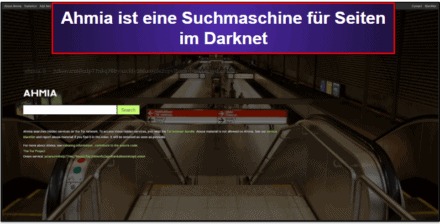
This makes them a safer (though still not foolproof) option for searching the Dark Web. The nice thing about Ahmia is that it lists .onion sites that want to be found. Many of those sites are listed because their devs have submitted the site directly to the search engine for indexing. Onion sites do not use regular domain names that are registered with a central authority (domain name registry). Instead, onion sites are derived from a cryptographic key and must be accessed using the Tor browser. Haystak is often considered one of the deepest search engines for the dark web because it indexes around 1.5 billion dark web pages.
Instead, they are designed using a cryptographic key and can be accessed only through software like the Tor browser. The Dark Web is the part of the deep web that is not indexed by search engines, like Google or Bing. For this reason, you cannot browse through these sites using your default search engine.
Tor Metrics
The deep web is the part of the internet you can’t access through search engines like Google and Bing. Also referred to as “non-indexed” content, it’s any content hidden behind some kind of access control such as a log-in or code word. It contains 7,500 terabytes of information, compared with only 19 terabytes of information in the “surface” web.