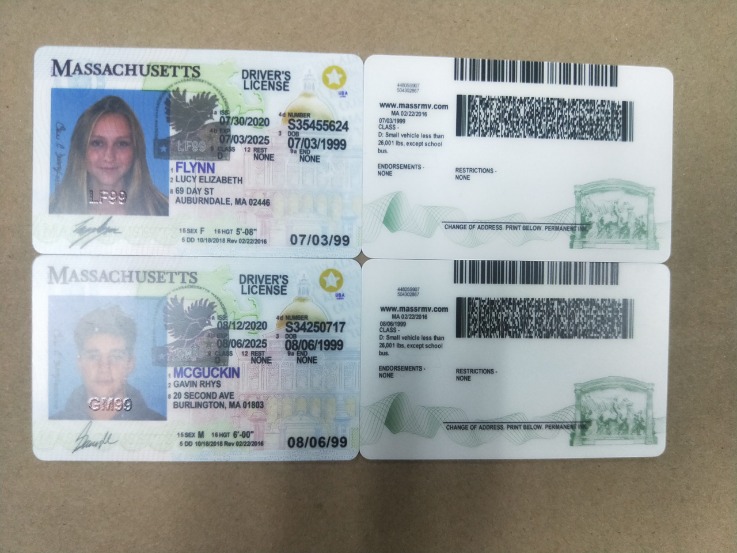
But recently, the dark web has made it extremely easy for anyone wanting to start a new life to simply buy themselves a brand new identity. Instead of submitting a static selfie, users may be asked to move, turn their head, or follow an on-screen prompt while showing their ID. These steps make it far more difficult for fraudsters to use screen captures, pre-recorded videos, or AI-generated visuals during the verification process.
Financial Losses From Synthetic Identity Fraud
While no method is perfect, modern approaches offer a more robust defense against the sophisticated threats of today. Advanced ID scanners with software capable of barcode and magnetic strip verification add an extra layer of security. These devices can quickly verify if an ID is consistent with its issuing guidelines. For years, businesses relied on manual inspections or blacklight methods to verify IDs.
Gullah Geechee Wars: A Struggle For Freedom And Identity
Many of the tools and practices in use today were designed to detect basic forgery or handle low-risk environments—not sophisticated, synthetic documents created by advanced image-generation models. But new research from cybersecurity firm Cato Networks has found that ChatGPT can now be tricked into creating a slew of fake documents, including passports, social security cards and driver licenses. It can also be used to spin up convincing counterfeit checks and receipts. Veriff’s global expertise and extensive document coverage ensure consistent, accurate verification across markets, helping organizations reduce fraud risk and scale securely.
AI Meets Humanity: A Global Snapshot Of Trust, Usage, And Unease

In 2025, the dark web has become one of the most organized black markets in the world, and yes — it’s more active than ever. People are buying and selling stolen identities, banking access, spyware, fake passports, ransomware kits, and even hacker-for-hire services — all paid for in cryptocurrency and hidden behind layers of encryption. By applying skepticism, leveraging trustworthy verification methods, following strong security habits, and actively participating in reputable communities, you can minimize the risks of social engineering and fraud. While no single tactic is foolproof, a layered approach—combining technical, operational, and psychological defenses—greatly improves your safety and confidence when navigating the dark web. Despite its reputation, the dark web isn’t solely defined by illicit marketplaces or nefarious activity.

Piso WiFi 10001 Pause Time, Login, Logout: A Complete Guide
Check out these best onion sites to access the dark web securely and anonymously. Image of counterfeit ID card and underground economy tools Artificially generated image. In addition to its emphasis on stolen credentials, 2easy Market offers a variety of cybercrime tools, such as hacking services, exploit kits, and other resources for conducting cyberattacks. Since its inception, the market has catered to criminals looking for high-quality counterfeit items, such as fake IDs, passports, and branded luxury goods. We’re back with another video in our Webz Insider video series on everything web data.
Dark Web 2025: Trends In Illicit Markets
The first method is the standard method sent through government-enforced mail. If shipping to the United States, it will take your package at least five days to arrive. If shipping to a different country, the shipping time depends on the speed of customs and your country’s mail service. If shipping to the United States, this method will add $75 to your total.
- Whether local or international goods, research documents, banned drugs, you name it, everything is available on this dark web platform (that’s one of the reasons why this should be monitored for security purposes).
- Researchers at threat intelligence and security experts Group-IB have already demonstrated that liveness detection in facial biometrics is no longer a verification gold standard.
- Parents also hire private investigators to patrol virtual metaverse bars.
- Thermoplastic materials accurately recreate the texture and flexibility of government-issued IDs.
- Unlike the regular internet which has websites indexed and tracks where you go, this anonymous network keeps many criminals from being identified by encrypting their location and movements.
In addition to the Tor browser, you should use an antivirus program (like Norton 360) to protect your device from malware infections, and a VPN (like ExpressVPN) to secure your IP address and traffic. Also, only use .onion links from legitimate sources like The Hidden Wiki. Its free plan comes with up to 1 GB of storage, 150 messages per day, and 1 email address. In addition, Darknetlive has a list of dark web vendors, which is very convenient — it offers detailed information about each vendor, including .onion addresses (in alphabetical order) and FAQs.
Fighting Real-time Fraud With Real-time Defenses
Dark web marketplaces, encrypted messaging apps, and 3D printing have enabled fraudsters to produce realistic-looking IDs at a low cost. These stats reveal how common the issue is becoming, even among teenagers as young as 15. It’s estimated that 95% of all standard customer onboarding processes fail to detect the presence of fake identification. This can lead to a direct average loss of US $15,000 per incident for organizations, and in some situations, this is far more.
Established in 2012, the platform is a time capsule that collects snapshots of websites. These onion addresses will remain online even if the original page disappears. It also keeps the graphical copy and text of the page for better accuracy. It is the dark web’s version of Wikipedia with a massive links directory.
Nowadays, many people use the Tor browser to surf the public internet and navigate the deeper parts anonymously. The system is designed to provide enhanced security and privacy features. Its key features include kernel hardening, application firewall, package security, filesystem encryption, meta-proxy encryption, and binary integrity. Another essential security feature is that all incoming and outgoing data from the app is encrypted, including any private and public keys involved. In due course, the framework was remodeled and made public as a secure browser.
Any discrepancies trigger internal security protocols, flagging suspicious accounts for further scrutiny or reporting to authorities, potentially resulting in legal action against account holders. Many businesses operate in regulated environments where identity checks are mandatory. When fake documents slip through, it is not just a technical failure but a legal one. Financial institutions, crypto platforms, and marketplaces can face serious consequences for unknowingly allowing money laundering, fraud, or terrorist financing.
Cost Vs Consequences
Cybersecurity specialists predict that AI-driven threats will grow significantly more advanced and adaptive by 2030. According to analysts, cybercriminals will increasingly leverage fully autonomous AI agents capable of independent decision-making and self-learning. These agents could autonomously identify and exploit vulnerabilities without human intervention, dramatically escalating both the scale and speed of cyberattacks.
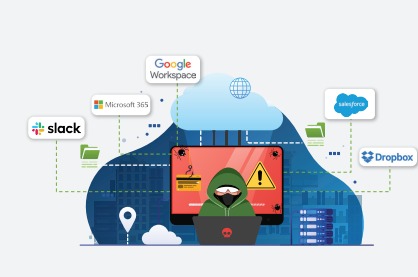
Given the anonymity and encryption inherent to the dark web, authorities have adapted by developing specialized investigative methods and cross-border cooperation. In conclusion, the pathway fake documents take to arrive on dark web markets is complex and multifaceted, involving cybercrime, sophisticated forgery techniques, and thriving digital black markets. Understanding these methods is crucial for law enforcement, cybersecurity professionals, and the general public in their efforts to mitigate these ongoing threats.
Examples Of Synthetic Identity Uses
Fortunately, these states’ IDs are among the easiest for detection software to flag—our system caught 100% of fake IDs from these high-volume states. We work with businesses of all sizes to provide scalable solutions to their identity verification challenges. However, fraud tools like Cloud Passport have likely not examined enough IDs and passports to create truly 1-to-1 fake IDs using AI. And there are multiple layers of protection that businesses can easily implement to make fraud more difficult, even with the use of an AI-generated fake ID.
Online And Social Media Monitoring
That delay gives fraudsters a window to act—applying for credit, opening accounts, or accessing services before red flags are raised. Without real-time checks that validate both document authenticity and user presence, platforms remain vulnerable. One of the most common uses for AI generated fake IDs involves financial fraud.